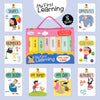

Reading is feeding your child's curiosity with the right kind of stories or story books. The urge kids have to listen to a story every night or every once in a while should be taken care of — read aloud, make up your own story, or read them from a book, do whatever it takes to give them a good story time, because while doing all of this you won't even realize what you are shaping.
Why is the moon so far away? Do fairies live among us? Are dragons real somewhere, and could they really fly? Kids ask questions like these all the time — and it's tempting to smile, call them silly, and move on. But to a child, these questions are never silly. They're real, and they matter, because this is how a child's mind is reaching out to make sense of a world that's still mostly mystery to them.
We, as adults, often forget about the lessons we learned or the stories we listened to from our grandparents or parents. Sometimes you wish you had a record of those stories. You often try to recall those lessons when you find yourself stuck, or try to relate to the character in them — because those weren't just simple stories, they were a treasure trove of lessons that, in their own quiet way, shaped who you are today.
The Best Replacement for Screens
Reading doesn't ask for much, but it gives back more than almost anything else a child can do with their time:
- Give your kids the freedom and space to imagine. A story only half-describes the world — the rest is built entirely in a child's own head, which is exactly where the real magic happens.
- Give them their own little room or corner. A reading nook, even a small one, tells a child that this is their space for stories. We talked about this in more detail in our older post, Importance of Reading Books: 13 Benefits for Readers, which has a few more tips on setting up a cozy reading corner at home.
- Create a small library in their room. It doesn't need to be large. A shelf, a basket, even a stack in the corner — what matters is that it's theirs.
- Keep different books within easy reach. A child is far more likely to pick up a book on their own if it's sitting in plain sight rather than tucked away.
It's a Tough Habit to Build — But Worth Every Bit of the Effort
Reading is a very tough habit to give a child, but once you do, there's no going back.
- Start with small, 10-minute stories. There's no rush. A short story read well does more than a long one read in a hurry.
- Consistency is the key. A story a day keeps a child happy and creative — not because of any single story, but because of what the habit becomes over time.
- A story a day keeps a child happy and creative. They feel, relate, apply, and learn. They begin creating their own versions or conclusions — and that's the beginning of something far beyond what any of us can fully understand or predict.
- Stories give them a freedom of expression. Unlike a screen, which hands a child a finished picture, a story leaves room for them to react, retell, draw, or act it out however they like — there's no single "right" way to experience it.
It Doesn't Need a Bigger Purpose Than That
Maybe there's no real agenda or motive behind all of this. Maybe they don't grow up to become an artist, a teacher, or a writer. Maybe they become a doctor or an engineer. Maybe they choose a completely different path altogether. But does it even matter, really, as long as the child is happy simply reading?
Is it truly necessary to expect that a good story will lead them to do something "impressive" in life? The most important thing is simpler than that — a good story quietly encourages a child to be good to others, and to grow into a good human being. That, on its own, is more than enough reason to read one more story tonight.
A Few Books to Start the Habit With
If you're looking for an easy way to build this into a nightly ritual, our 365 Bedtime Stories and 365 Goodnight Stories collections are built around exactly this idea — a different story for every single night of the year, so the habit never runs out of something new to offer. Pick one up, read a page or two together, and let tonight’s story be the start of tomorrow’s.
The Takeaway
A child who grows up with a story every night isn't just building vocabulary or imagination, though they're building plenty of both. They're building a quiet, daily habit of curiosity and kindness that tends to stay with them long after the books themselves are outgrown. You may never know exactly which story did it — but one of them will.